The first time I sat in a hot tub during a Winnipeg cold snap, the steam billowed up like a slow-motion fog machine while the thermometer sulked at minus twenty. The water sat at 102 degrees, the stars were clear, and I remember thinking, this is exactly what February was missing. Since then I’ve helped more than a few Winnipeggers choose a tub that suits our particular climate and our particular backs, shoulders, and budgets. The secret to buying well isn’t just chasing a sale, it’s understanding hydrotherapy, and how specific features translate into relief, recovery, and a little daily sanity.
If you’ve been hunting “hot tubs for sale” or typing “hot tubs store near me” with numb fingers, this guide will help you separate the marketing fluff from the engineering that actually matters. We’ll talk jets without getting lost in jargon, pumps without pretending horsepower is everything, and water care that doesn’t turn you into a part-time chemist. Most importantly, we’ll link these pieces to what your body and your Winnipeg winter lifestyle actually need.
What hydrotherapy really does for you
Hydrotherapy is simply the therapeutic use of warm water and directed pressure to ease pain, improve circulation, and calm the nervous system. It sounds quaint until you’ve had a week of shoveling wet snow and your lower back stages a small mutiny. Warm water dilates blood vessels and reduces joint stiffness, which is why fifteen minutes at 101 to 103 degrees can make arthritic fingers feel almost normal again. Buoyancy takes roughly 85 to 90 percent of weight off your joints, a relief most people feel the moment they ease down to neck level. Directed jets add mechanical massage to the mix, stimulating muscle tissue and flushing metabolic waste that builds up after exercise or long days at a desk.
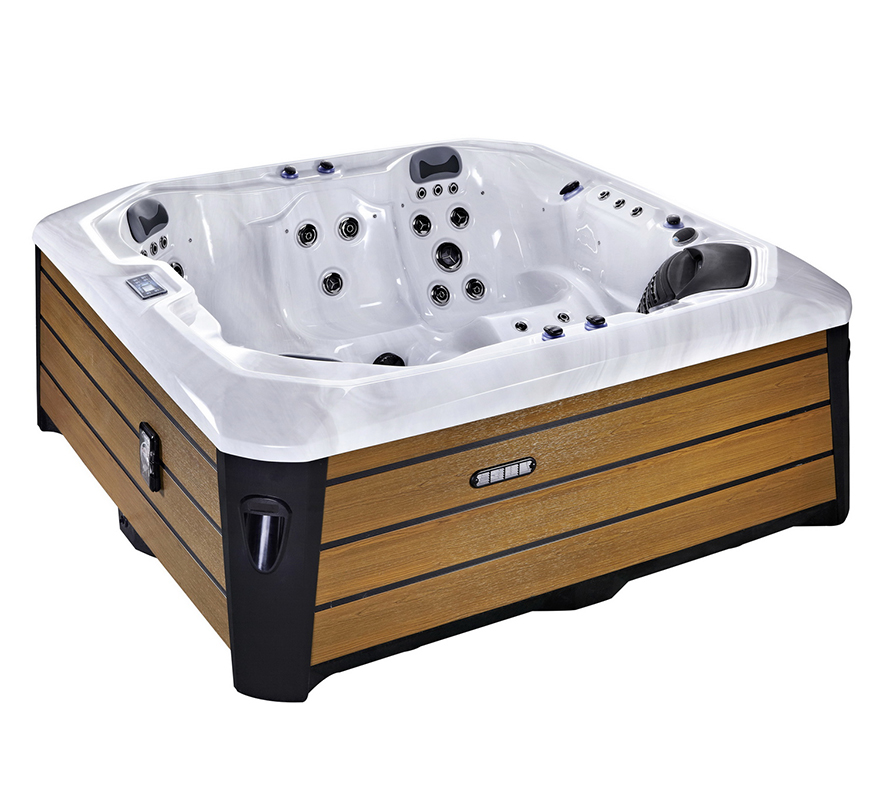
I’ve seen hockey players use a two-stage routine before bed, first ten minutes at high-intensity jets on quads and hips, then five minutes with low-air, warm water caressing the lower back. They sleep better, and they wake up with less ankle stiffness. For office workers, the hero tends to be the neck collar jets paired with a lounger seat that cradles the spinal curve. Hydrotherapy is personal, but the physics behind it is consistent and reliable when the hardware is well designed.
Winnipeg’s climate changes the equation
Hot tubs that live in Vancouver or Atlanta have an easy life. They don’t face nor’easter winds that sneak under cabinet skirts or polar nights that demand real insulation. In Winnipeg, a tub has to fight thermal loss on two fronts: cold air that pulls heat from the exposed water surface, and conductive loss through the shell and cabinet. That’s why the brand that looks affordable online can cost you real money in electricity from November through April.
The right construction details pay off. A tight-fitting insulated cover that isn’t waterlogged, full-foam insulation that supports plumbing and resists convective air movement, a base pan that keeps rodents and drifting snow out of the cavity, and a cabinet with minimal air leakage. If you see steam venting freely from cabinet seams on a demo unit outdoors, imagine that steam carrying your hydro bill with it. In our market, tubs that hold temperature well can run between 30 and 70 dollars per month in winter, depending on size and usage. Flimsy builds can triple that.
Jets, pumps, and the myth of more equals better
Hot tubs for sale often shout about jet counts like a badge of honor. I’ve soaked in 140-jet monsters that felt like a bad handshake, all sizzle, no pressure. Jet performance isn’t about how many chrome circles dot the shell. It’s about water volume, pipe diameter, pump matching, and smart placement.
Think in terms of zones and objectives. Do you want a deep tissue lower-back massage or a gentle broad-pressure caress along the shoulder blades? Big rotary jets deliver a kneading feel on large muscle groups. Clustered micro-jets pepper trigger points along the spine. Air-injected jets add effervescence, which can feel relaxing but lowers water temperature more quickly, a small energy trade-off in winter. Good tubs let you throttle zones via diverter valves, which means you can direct the full pump output to the seat you’re sitting in, rather than weakening everything to feed empty seats.
Pumps matter, but raw horsepower lies to you. A well-engineered two-pump system with efficient wet-ends and 2-inch plumbing can outperform a three-pump system choked by narrow lines and tight turns. Look for continuous duty ratings rather than peak, and ask to feel the pressure at the seat during a wet test. Your body is the best flow meter you own.
The anatomy of a great hydrotherapy seat
One-size-fits-all is a myth in bathing. The best seats are sculpted for a typical body but accommodate variation with footwell depth, arm cutouts, and jet adjustability. There are four seat types I recommend trying deliberately.
The therapy captain’s chair sits upright with firm lumbar support and a neck-jet collar. It’s the chair you want after scraping ice off the sidewalk. Make sure the neck jets are adjustable and not buried in the shell, or they’ll blast the base of your skull uncomfortably.
The full-body lounger looks seductive in the brochure and earns split reviews in the real world. People shorter than 5'6" can float out of them unless there is a raised calf bar or well-placed foot anchor. Taller folks often love the continuous line of jets from calves through hamstrings to glutes and low back. Wet test for slippage. If you keep drifting, look at a “reclined but not supine” semi-lounger instead.
The deep hip bucket typically anchors a corner with side jets that grab the piriformis and glute medius, a godsend for runners and skaters. These seats aren’t flashy, they just fix stubborn hip tightness.
The cool-down perch sits higher, handy for overheated soakers or kids. Don’t dismiss it. That perch is also a great platform for targeted calf and Achilles massage when the diverter is set right.
Seating ergonomics spell the difference between fifteen minutes of contentment and constant shuffling. When you visit a Winnipeg Hot Tubs showroom, bring bathing suits, ask for a wet test, and sit long enough to feel if your mid-back presses firmly against the jet face or arches away.
Water care without the chemistry degree
If maintenance turns into a chore, even the best tub becomes an expensive yard ornament. Modern water care systems can simplify life, but each has quirks. Ozone systems inject ozone gas into the water to oxidize contaminants. They reduce sanitizer demand but don’t replace it. UV-C systems bathe water passing through a chamber in ultraviolet light, neutralizing pathogens effectively, again reducing but not eliminating the need for chlorine or bromine. Saltwater chlorine generators create chlorine from salt dissolved in the water, which can feel gentler on skin and reduce the harsh smell when managed properly. They do, however, require attention to cell life and proper salt levels.
Filtration matters as much as sanitization. High-square-footage cartridges capture more debris and can extend the time between cleanings. A 24-hour circulation pump that runs quietly and continuously will keep water moving through filters and heaters with less energy than cycling a jet pump on and off. In winter, that constant movement also helps avoid cold spots in plumbing.
Practical rhythm for a Winnipeg winter: test and tweak sanitizer two to three times a week, clean or rotate filters monthly, purge plumbing with a line cleaner every three to six months, and replace water every three to four months if you soak often. If your tub sees heavy winter use, plan a drain and refill during a warm spell or inside a garage with a hose bib, and have a submersible pump ready. Leaving a tub empty in deep winter is asking for damage.
Heat, energy use, and how Winnipeg bills it
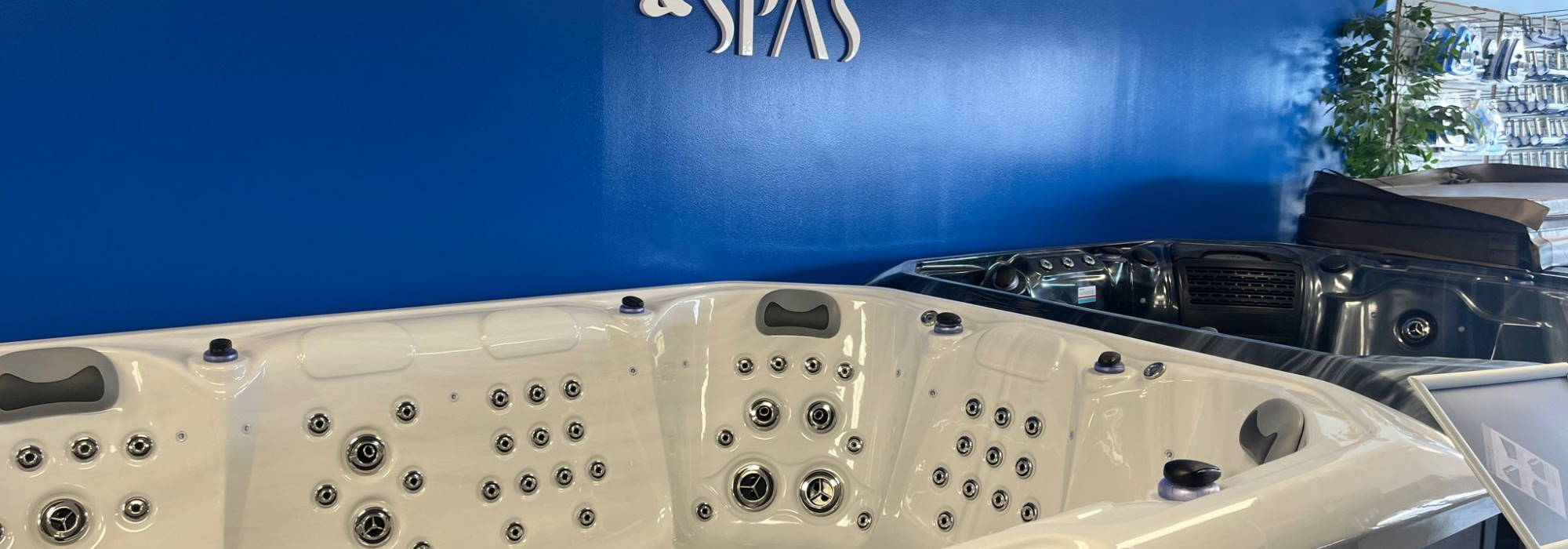
Three variables shape your energy bill: insulation quality, cover performance, and your habits. I’ve measured a 7-person, full-foam tub with a tight cover at Swim and Spas Winnipeg Hot Tubs 102 degrees using around 8 to 12 kWh per day in January when used for twenty minutes nightly by two people. Moving to an older tub with partial foam and a spongy cover, the same routine doubled consumption. People obsess over heater wattage, but the heater mostly cycles to maintain temperature. Heat loss is the thief.
Cover lifters help more than you think. Wrestling a heavy, waterlogged cover in minus twenty winds encourages shortcuts, like leaving the tub open longer than necessary or skipping the soak entirely. A simple, sturdy lifter reduces open time, reduces heat loss to the night air, and saves both energy and enthusiasm. Also, check your cover every season. If it feels like a saturated mattress, it is. Waterlogged foam stops insulating and starts conducting the cold.
Smart controls let you schedule heat, but avoid big temperature swings in winter. Heating 3 to 4 degrees back up after a prolonged setback burns more energy than maintaining a steady 101 to 103, especially when the air is arctic. If you take weekends away, a modest drop to 98 works, not a plunge to 90.
The quiet details that separate good from great
Beyond the headline specs, small engineering choices improve the daily experience. A molded, insulated equipment bay door reduces noise and keeps rodents out. Isolation pads under pumps dampen vibration that otherwise resonates through the cabinet and into your deck joists. Quick-drain ports that accept a standard garden hose make water changes less frustrating in the cold. LED lighting that points below the waterline instead of upward cuts glare on dark winter nights and makes the soak feel cocooned.
I also look at plumbing sweeps. Gentle 45 degree bends move water more efficiently than sharp 90s, which helps flow and reduces strain on pumps. Tubs that glue and clamp every junction leak less over time than those that rely heavily on barbed fittings and hose clamps. It’s not glamorous, but it shows up five years later when you’re not calling for service.
Wet testing like a pro
The showroom dry sit tells you very little. A real wet test reveals pressure, ergonomics, and noise. If you can arrange it, bring two people and plan for at least twenty minutes. Start with the water at 102 degrees. Sit in each primary seat for two to three minutes while adjusting air and water mix as well as diverter valves. Pay attention to how the jets feel on muscle and bone. Good jets hit muscle; bad ones buzz the spine or wings of the scapula.
Switch to a low-air, high-water mix and notice the change. Many people prefer less air than they expect after the novelty wears off. Put your head back and check the splash pattern at the neck jets. If they scatter water into your face, that will get old fast on a -15 night. Finally, turn everything off and listen. The baseline circulation pump should be whisper quiet. If you hear cabinet rattles or gurgling, that noise will be louder on your deck at home.
Picking the right size for your space and lifestyle
Most buyers swing between a compact 4 to 5 seat, a family-sized 6 to 7 seat, or the party-sized 8. Our decks and yards in Winnipeg often favor the middle choice, but measure twice and check access paths. You need room to stand on all sides for service, especially the equipment bay. If you plan to recess the tub, leave removable skirting or a service hatch. I’ve had to explain to more than one homeowner that the pump cannot teleport out of a tight vault.
Capacity isn’t just about how many people you could squeeze in at a birthday party. It’s about how many quality seats you’ll use weekly. If two people soak nightly, prioritize duplicate therapy seats rather than a single showpiece lounger and a lineup of benches. You will not climb over three friends to reach the one great seat after a long day.
Thinking about the base, the delivery, and winter installs
The tub will weigh between 700 and 1,200 pounds empty. Water adds another 3,000 to 5,000. Snow load on your deck is real. If you’re placing the tub on a raised deck, get an engineer to confirm load capacity. On grade, a properly compacted gravel pad topped with patio slabs works, though a concrete pad is ideal. The base must be level and well-drained. Ice heave can tweak a cabinet just enough to cause a slow leak at a union.
Winter delivery is doable. Pros use sleds and spa carts. Clear a path of ice and snow, protect tight corners with cardboard, and have a plan for power ready so the fill and heat cycle can start immediately. Frozen hoses become garden sculptures surprisingly fast when a north wind kicks up.
What local service and warranty support is worth
A fair number of people search Winnipeg Hot Tubs only when something breaks. That’s when you learn who truly has a parts bin and a tech who will venture out after a blizzard. Warranty fine print matters. Ask who covers labor, not just parts, and how long control systems are supported. Some brands offer a shell warranty that looks long but covers only structural cracking, not cosmetic crazing. Electronics usually carry shorter terms, which is fine if the dealer stocks spares and answers the phone.
Here’s where visiting a hot tubs store near me in person pays off. You can feel build quality, inspect plumbing, and, most importantly, meet the people who will take your service calls. A dealer who keeps test strips at the counter and asks about your sanitizer levels in summer will probably stand by you in January.
Sanitizer choices and skin comfort
Bromine is popular in hot tubs because it remains effective at higher temperatures, and it converts to bromamines that remain sanitizer-active, unlike chloramines. The downside is a more noticeable smell if levels drift. Chlorine, used properly at hot tub temperatures, can be just as comfortable, especially with cyanuric acid kept low or absent in systems designed for hot water. Salt systems generate chlorine consistently and can produce very soft-feeling water. In our dry winters, skin comfort matters, so consider a regimen with additional non-chlorine oxidizer after heavy use to keep levels moderate while maintaining clarity.
People with eczema or sensitive skin tend to do well with balanced pH and alkalinity, a modest dose of borates for buffering, and a gentle weekly oxidizer routine. If your hands crack in January, wear gloves outside and keep your tub at 101 rather than 104. Those few degrees help comfort and reduce post-soak dryness.
Noise, neighbors, and winter nights
Hot tubs can be quiet nooks or neighborhood speakers, depending on design and placement. Put the equipment bay away from bedroom windows, yours and theirs. Enclose the pad on three sides with fencing or shrubbery to block winter wind and dampen sound. Avoid echo chambers under covered decks that bounce pump vibration. Some tubs let you schedule filtration cycles; run them mid-afternoon rather than 2 a.m. Your neighbor’s gratitude will outlast the thaw.

Cost ranges, and where to spend versus save
Entry-level acrylic tubs with basic insulation and one to two pumps often start in the mid to high four figures, creeping higher with steps, lifters, and setup. Mid-tier models with full-foam insulation, better controls, and thoughtful jetting live comfortably in the five-figure range. Premium tubs add refined ergonomics, higher output but efficient pumps, advanced water care, and heavy-duty cabinets that tolerate extreme cold without warping.
Spend on insulation, shell quality, and pumps that deliver steady pressure at the seat. Save on gratuitous jet counts, disco lighting packages, and complicated waterfalls that cool your water and impress teenagers for roughly six minutes. A great cover is worth it. A spare set of filters is a small investment that makes maintenance easier.
Real-world soak patterns and how to tune your tub to them
I often ask buyers to describe a week of use. The most common pattern in Winnipeg looks like this: five evening soaks, two people, 15 to 20 minutes, sometimes with a weekend family dip that adds another hour of open-lid time. Set the water to 102 for evenings, drop to 101 for daytime standby, and use the diverter valves to feed the seats you frequent. Trim the air mix during deep winter to keep the water warmer and reduce cooling from aeration. Keep a towel warmer or a simple insulated bench near the tub. The first thirty seconds after you stand up are the only unpleasant part of a winter soak, so make those seconds easy and you will use the tub nightly.
Troubles you might encounter and how to avoid them
Cloudy water after parties usually comes from an oxidizer deficit and overwhelmed filters. Right after a crowd soak, run jets, add a non-chlorine shock, and pull the filters for a quick rinse once the water clears. Foaming typically means residual soaps from swimwear or low calcium hardness. Switch to a no-detergent rinse for suits and bump calcium to the manufacturer’s target.
Air locks during a winter refill can trigger heater errors and anxiety. Crack the union above the pump gently until water burps air out, then retighten. If the top control flashes a flow error, check that the filters are not clogged and that the slice valves in the equipment bay are fully open. Keep a small space heater on hand for emergency warmth during long service visits, placed safely at a distance from the cabinet.
When to say yes
You’ll know a tub is right when three things line up. First, the wet test seats feel like they were carved for your body, and you can get the jet pressure you want without fiddling endlessly. Second, you feel confident that the insulation and cover will stand up to our winters without turning your electricity meter into a blur. Third, the local dealer earns your trust in five minutes of straight answers. When those conditions are met, the rest is just scheduling delivery and deciding whether you prefer 101 or 103 on a night with hoar frost crystallizing the fence rails.
If you’re shopping locally and searching Winnipeg Hot Tubs brings up a few reputable showrooms, take an afternoon to visit. Ask to see the insulation cross-section, open the equipment bay, and request a wet test. You won’t regret the time. A hot tub is more than a backyard toy. For many of us in this city, it becomes the warmest room we own from November to March, sky included. And if your knees stop aching and your sleep improves by twenty minutes a night, you’ll forget every ad that tried to sell you on jet count and remember the one seat that fits like it was made for you.
A short buyer’s field checklist
- Try at least two models in a wet test, staying in each primary seat for two to three minutes with different air and diverter settings. Inspect insulation type, cover quality, and cabinet sealing, then ask for realistic winter energy estimates. Verify water care system components and maintenance rhythm, including filter size and circulation pump details. Confirm delivery access and base preparation, plus who handles electrical hookup and the first fill. Read warranty terms for parts and labor, and meet the service techs who will support you after the sale.
Final thoughts from the frozen deck
There’s a certain joy in stepping into a tub while a Winnipeg sky cracks with winter stars. Your breath fogs, your shoulders drop, and your brain goes quiet in a way that doesn’t happen on a couch. Hydrotherapy features, when chosen with your body and our climate in mind, make that ritual better by degrees. Not louder, not flashier, just better. The right jet in the right place, the right pump behind it, a cover that holds heat like a bank vault, and a water care system that keeps your hands out of test strips more than necessary. That’s the whole game.
So, dig into the details, enjoy the wet tests, and treat the process like you’re fitting a pair of boots you’ll wear every day for years. When you finally step out into the cold with skin tingling and joints loose, you’ll know why you didn’t settle for a bargain-bin answer to a Winnipeg problem.